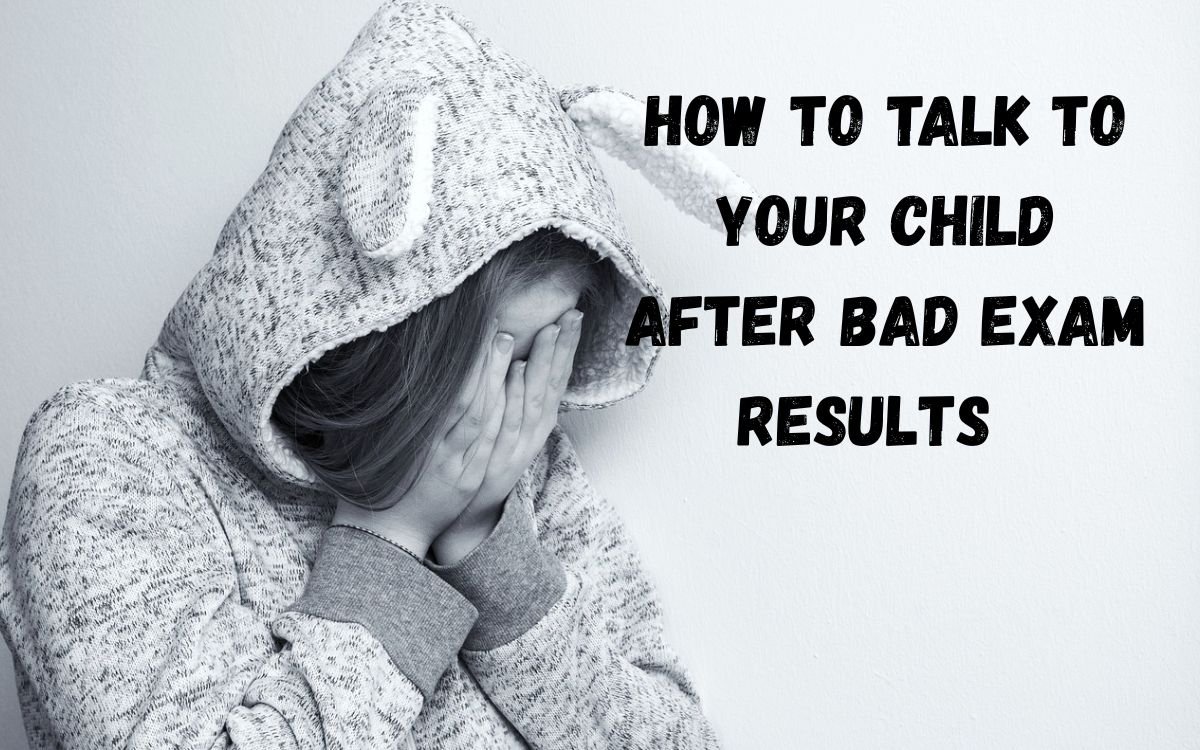
The Exam results are out and they are worse than either of you expected and also your child is quiet, embarrassed, or already defensive and you are trying to figure out what to say in the next sixty seconds that will not make things worse. What happens in that conversation matters more than most parents realise. Research published in the British Journal of Educational Psychology (2025) found that the way parents talk to their children about failure and setbacks is directly related to their children's long-term fear of failure and the words you choose today shape how your child responds to difficulty for years to come.
This is not a guide about softening the blow or pretending results do not matter, It is a guide about having a conversation that is honest, calm, and genuinely useful one that keeps your relationship intact and gives your child a path forward.
Your First Reaction Is the Most Important Thing You Will Do Today
Child psychologists consistently emphasise that parents should maintain a sense of calm when exam results are disappointing because children mirror their parents' emotions means that If you react with anger, visible disappointment, or panic, your child's anxiety increases immediately and they begin to manage your emotions instead of processing their own. This does not mean pretending you are not concerned, it means giving yourself a moment before you speak.
If you feel anger or frustration rising, that is understandable and shows that you care about your child's future, but this is not the moment to express it. Your child already knows the result was poor and what they do not yet know is whether they are safe talking to you about it.
Your first words should communicate one thing above all else: you are on their side.
A simple, calm opening is enough: “Okay. Tell me how you are feeling about It”.
That is it. That is the right first sentence, Not “what happened?”, Not “I knew this would happen”, Not “how could you let this happen?” Just how are you feeling?
Listen First. Diagnose Later
Once your child starts talking, your job is to listen not to immediately jump into solution mode and parents instinctively want to fix things but the impulse to say “ okay, here is what we are going to do” is strong and well-intentioned. But a child who does not feel heard will shut down. And a child who shuts down cannot absorb advice, plans, or encouragement.
Listen to what they say, listen to what they are not saying. And listen, are they embarrassed? Genuinely confused about where things went wrong? Relieved it is over? Scared about what happens next? The strategies parents use vary widely from helping children identify their emotions and reframe perceptions, to emphasising positive aspects, to employing suppression or dismissal. Research is clear that dismissal (“it is just one exam, don't worry about it”) and suppression ("you should not feel that way") are the least effective approaches , they communicate that your child's feelings are wrong or inconvenient, which increases shame rather than reducing it.
Acknowledgement is the strategy that works: “That is really disappointing. I understand why you feel that way.”
You do not need to have an answer ready. You just need to stay present.
What Not to Say, and Why It Matters
There are several responses that feel natural in the moment but consistently produce the opposite of the intended effect. Child psychologists and educational researchers agree on most of them. To say things like:
“I told you so.” Even if you predicted this outcome, saying so achieves nothing except damaging trust and your child already knows. Adding “I told you so” makes them less likely to come to you next time things go wrong and things will go wrong again.
“Your brother / classmate / cousin did fine.” Comparison is one of the most reliably demotivating things a parent can say. It does not inspire effort it produces shame and shame produces avoidance, not motivation.
“How could you let this happen?” This frames the result as a moral failure rather than an academic one and a child who believes they are bad rather than that they made mistakes or lacked a skill is far less likely for them to try again.
“All that money I spent on your fees / tuition / books.” This introduces guilt into an already painful moment and guilt is not a useful motivator for academic improvement as it is, however, very effective at breaking the parent-child relationship over time.
“You just need to work harder.” This feels like advice but offers no information and if your child knew how to work harder effectively, they would have done so. What they usually need is not more effort it is better strategy, better support, or a clearer understanding of what went wrong.
The Questions That Actually Help
Once your child has had space to share how they feel, and you have listened without rushing to fix things, these questions open a productive conversation:
“What do you think made the biggest difference to this result?” This question invites self-reflection without accusation. It treats your child as someone capable of analysing their own situation , which they are.
“Was there a specific part of the exam or subject you felt most unprepared for?” This narrows the conversation from a global failure (“I am bad at school”) to a specific gap (“I really struggled with the essay questions”). Specific problems have specific solutions.
“What would have needed to be different in the lead-up to feel more prepared?” This question is forward-looking. It shifts from blame to agency. It also often produces more honest answers than you might expect.
“What do you need from me right now?’ This is the most underused question in these conversations and some children want practical help a tutor, a different study schedule, help understanding a concept also some want emotional support. Some want to be left alone to process for a few hours. Asking directly, and then respecting the answer, is one of the most powerful things a parent can do.
The Growth Mindset Conversation Done Right
You have probably heard of Carol Dweck's growth mindset research the finding that children who believe their abilities can improve through effort and strategy significantly outperform children who believe their intelligence is fixed. But the growth mindset conversation is frequently done badly by well-meaning parents meaning Saying “you just need to believe in yourself” or “you can do anything if you try hard enough” does not build a growth mindset but It can actually backfire because when your child tries hard and still struggles, they conclude that even effort is not enough for them.
What actually works is being specific about the path between the current result and a better one. Not “you can do it” but “here is what the students who improved in this subject did differently.”
That means understanding specifically what went wrong like if it is exam technique knowing the content but losing marks on how answers were structured?, Was it a conceptual gap not understanding a core topic that everything else depended on? , Was it consistency studying in bursts rather than regularly? Each of these has a different solution, and naming the right one gives your child something concrete to hold onto.
After the Conversation What Comes Next
Once the immediate conversation is over, give it a day before moving into action mode. Your child needs time to process. So do you. When you do return to the topic, focus on one or two specific, achievable changes not a complete overhaul of every habit and routine. Research consistently shows that trying to change everything at once produces compliance for a few days followed by collapse.
One more thing worth saying honestly: sometimes a bad result is a signal that your child needs more support than you can provide at home. This is not a failure of parenting. It is information. A gap in understanding, poor exam technique, or a subject that has consistently felt confusing are all things that a qualified tutor can address specifically and effectively often in a shorter time than parents expect.
At Mathrone Academy, we work with students at every level — matching them with vetted, experienced tutors who know exactly how to identify what went wrong and build from there. Sessions are available online or at home, and we match students with the right tutor within 24 hours.
WhatsApp us on +250 786 684 285
Request a tutor at Mathrone Academy
Frequently Asked Questions
Q: What should I say to my child immediately after they get bad exam results? Stay calm and lead with empathy. A simple opening like “Tell me how you are feeling about it” gives your child space to express themselves without feeling judged. Avoid expressions of anger, disappointment, or comparison to others. Your first response sets the tone for the entire conversation.
Q: How do I motivate my child after a bad exam result without pressuring them? Focus on specific, actionable next steps rather than general encouragement. Ask what they think went wrong and what they need to feel more prepared next time. Motivation built on understanding a clear path forward is more durable than motivation built on pressure or external reward.
Q: Should I get my child a tutor after bad exam results? If the results reflect a consistent gap in understanding rather than a one-off bad day targeted tutoring in the specific subject is often the most effective intervention. A good tutor identifies exactly where understanding breaks down and builds from that point, which produces measurable improvement faster than general study pressure.
Q: What should I avoid saying to my child after bad exam results? Avoid comparisons to siblings or classmates, “I told you so," guilt-based comments about money spent, and vague instructions to “just work harder.” These responses increase shame and reduce motivation. They also make children less likely to come to you for support in future.
Read: Why Your Child Hates Studying — and What Actually Fixes It →
Read: How to Study Effectively — Proven Techniques Every Student Should Know → Browse tutors by subject →
Published by Mathrone Academy connecting students worldwide with quality education resources and expert tutoring. Visit us at mathroneacademy.com